Keeping outdoor areas clean requires more than regular sweeping. Property managers and municipal teams need equipment that matches road conditions, cleaning frequency, available space, and daily operating needs. Choosing suitable machines can affect maintenance efficiency, operator workload, and public space conditions.
A practical selection process should focus on cleaning functions, mobility, energy use, and long-term operation. This guide explains key points buyers should review before selecting a street sweeper for different outdoor environments.
Understanding Cleaning Requirements Before Equipment Selection
Different areas create different cleaning challenges. Municipal roads may collect dust, leaves, and daily waste, while commercial properties may need frequent cleaning around entrances, parking areas, and pedestrian zones.
Before purchasing equipment, buyers should review the surface type, cleaning area size, waste volume, and available storage space. A machine designed for narrow paths may not suit wider roads, while larger equipment may be difficult to operate in limited spaces.
Cleaning functions also influence selection. Some projects need basic sweeping, while others require washing, dust control, and waste collection together. Evaluating these requirements helps buyers compare equipment based on actual site conditions.
Comparing Operation Methods and Equipment Flexibility
Operation style is another important factor for buyers. Traditional machines often require dedicated operation methods, but newer designs may provide different control options for changing work environments.
For example, electric street sweepers are designed for users who need quieter operation and more suitable energy management for specific working environments. When selecting equipment, buyers should review battery duration, charging requirements, operating controls, and maintenance arrangements.
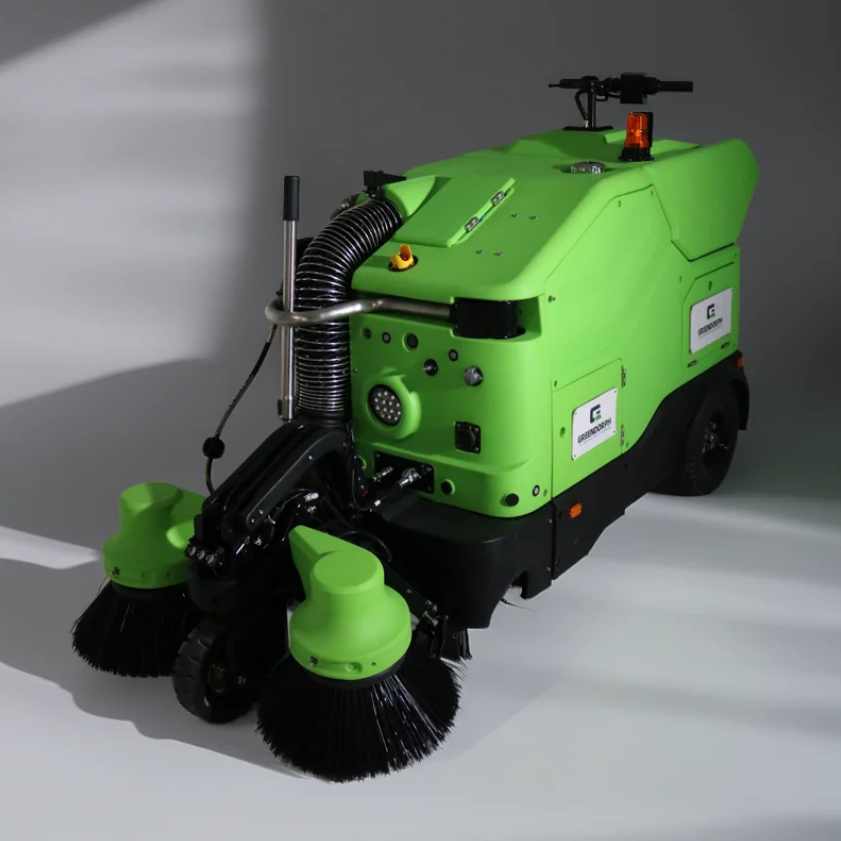
The Omniclean Urban Street Sweeper YJ80 from Greendorph is designed with three operator-friendly modes for different cleaning situations. It supports manual operation, auto-following movement, and towed traction, giving crews more flexibility when working across different outdoor environments.
Evaluating Multi-Function Cleaning Capability
Cleaning efficiency depends on how well a machine handles different types of waste and surface conditions. Equipment with combined functions can reduce the need to switch between separate machines during daily maintenance work.
The YJ80 combines several cleaning functions within one compact unit. Its vacuum system integrates high-pressure flushing, water-spray cleaning, turbine blowing, targeted tube collection, and dust-suppression misting to handle different outdoor cleaning tasks.
This integrated design allows operators to manage dust, debris, and surface cleaning tasks with fewer equipment changes. For property and municipal buyers, combining multiple functions in one machine can simplify daily cleaning arrangements.
Considering Size, Mobility, and Working Environment
Space limitations are important when choosing cleaning equipment. Sidewalks, pedestrian plazas, parking structures, and outdoor areas often include corners, narrow routes, or changing layouts.
Compact equipment can provide more flexibility in these locations. Buyers should consider turning ability, operator visibility, storage requirements, and whether the machine can move between different areas without creating operational difficulties.
The YJ80 features a compact structure that helps operators work in areas where space is limited. Its design supports movement across sidewalks, pedestrian plazas, parking structures, and mid-sized outdoor spaces while maintaining practical cleaning coverage.
Reviewing Energy Performance and Daily Operation
Energy use has become a key consideration for many organizations managing public or private spaces. Buyers often evaluate operating time, noise levels, and environmental impact when comparing cleaning equipment.
Battery-powered designs can support quieter working conditions, which is useful for areas near residential communities, offices, or public facilities. However, buyers should still review runtime, charging plans, and workload requirements before making a decision.
Different street sweeping projects require different equipment configurations, and electric solutions are becoming an option for organizations that consider noise levels and operating methods. The YJ80 provides up to 8 hours of runtime on a single charge with near-silent electric operation and zero emissions during use.
Looking at Supplier Capability and Product Support
Equipment selection is not only about machine specifications. Buyers should also consider technical communication, product information, and support during the purchasing process.
For B2B customers, working with a manufacturer that understands different application environments can make project planning easier. Greendorph provides outdoor cleaning equipment solutions for organizations that need practical machines for property and municipal maintenance tasks. Their Omniclean Urban Street Sweeper YJ80 combines cleaning functions, flexible operation modes, and compact design to meet different outdoor working requirements.
They focus on equipment design that combines cleaning functions, operating flexibility, and user-oriented structure. Buyers can review product details, application requirements, and operating conditions before deciding whether a model fits their projects.
Making a Practical Decision for Long-Term Use
A suitable cleaning machine should match the actual working environment rather than only focusing on individual specifications. Buyers can create a checklist covering cleaning functions, mobility, energy requirements, and operation methods.
When comparing electric street sweepers, it is also useful to consider future maintenance needs and operator experience. A machine that fits daily workflows can help organizations manage cleaning tasks with clearer processes.
A detailed evaluation helps property and municipal buyers select equipment that supports their maintenance goals. By understanding site conditions and equipment functions, buyers can make more practical choices for long-term outdoor cleaning operations.
Building a Clear Equipment Selection Plan
The right selection process combines technical review with real working requirements. Factors such as cleaning performance, movement flexibility, operating time, and support resources all influence the final decision.
For property and municipal projects, a clear evaluation method can help buyers balance performance with practical operation needs. Reviewing equipment features before purchase creates a stronger foundation for daily maintenance planning.
