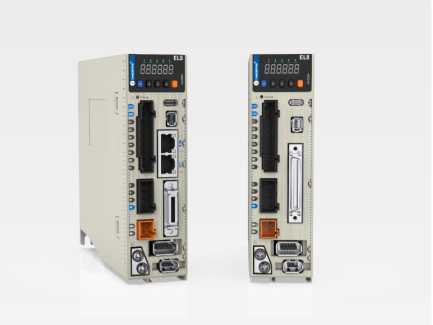
The evolution of modern machinery increasingly demands not just independent motion, but harmonized, simultaneous movement across multiple axes. This coordinated motion control is the cornerstone of complex applications like robotics, advanced packaging, and CNC machining. At the heart of these sophisticated systems are multi-axis servo drive platforms. These integrated units, which control two or more servo motors from a single module, offer profound advantages over using multiple discrete drives. By consolidating control logic, power, and communication, they streamline design, enhance performance, and unlock new levels of synchronization. Manufacturers seeking to build competitive equipment must understand these benefits. As a provider of advanced motion solutions, Leadshine offers insights and products, including its range of compact servo drives, that exemplify how multi-axis architectures deliver tangible value in demanding coordinated motion applications.
Space and Cost Efficiency Through Hardware Consolidation
One of the most immediate benefits of a multi-axis servo drive is the significant reduction in control cabinet footprint. In traditional setups, each motor requires its own drive module, input power filter, and associated wiring. A single multi-axis drive replaces several of these discrete units. Leadshine’s design philosophy often emphasizes compactness, as seen across their product lines. This focus on compact servo drives is amplified in a multi-axis context, where the space saving per controlled axis can be dramatic. This consolidation translates directly into smaller, less expensive control enclosures and improved airflow for thermal management. Beyond space, there is a substantial cost benefit. Procuring one multi-axis unit is typically more economical than buying multiple single-axis drives. It also reduces the bill of materials for components like power supplies, circuit breakers, and wiring harnesses, lowering both initial machine cost and long-term spare parts inventory.
Enhanced Synchronization and Motion Path Accuracy
Coordinated motion, where the path of a tool or end-effector depends on the precise interpolation of multiple axes, requires extremely tight synchronization between drives. When axes are controlled by separate drives communicating over a network, even nanosecond-level jitter can introduce path error. A multi-axis servo drive intrinsically solves this challenge. Since all axis control loops are housed within the same hardware and often share a common processor, the coordination between axes is virtually instantaneous and jitter-free. This allows for exceptionally smooth and accurate contouring, essential in applications like robotic arc welding, laser cutting complex shapes, or high-speed pick-and-place operations. The advanced control algorithms within a drive from a manufacturer like Leadshine, which may include features for anti-vibration and resonance suppression, are applied consistently across all axes, ensuring uniform performance and superior path fidelity.
Simplified System Integration and Reduced Wiring Complexity
Engineering time and cabinet wiring are major cost drivers in machine building. A multi-axis servo drive dramatically simplifies both. From an integration perspective, there is only one drive module to configure, mount, and connect to the network, rather than multiple units. This reduces engineering and commissioning time. The wiring simplification is even more impactful. Power input, main communication cabling (e.g., EtherCAT), and safety connections are centralized to one point. The connections to the individual motors become simpler, often requiring only motor power and feedback cables from the centralized drive location. This drastic reduction in panel wiring minimizes points of failure, improves reliability, and makes systems easier to troubleshoot and maintain. For machine builders, this streamlined architecture enabled by the compact servo drive from suppliers like Leadshine results in faster time-to-market and lower installation costs.
Improved Scalability and Design Flexibility
A multi-axis servo drive offers superior scalability for machine platforms that come in variants with different numbers of axes. Instead of redesigning the control panel layout for each variant, designers can use a standardized multi-axis drive platform which supported by manufacturers offering drives in different axis counts, provides immense design flexibility. It allows for cleaner, more modular machine designs and simplifies inventory management for the OEM. Leadshine’s broad motion control portfolio supports this scalable thinking, enabling customers to choose the optimal drive configuration—whether integrated multi-axis or high-performance single-axis—for their specific coordinated motion challenge.
Centralized Control Intelligence and Streamlined Data Management
In a coordinated system, managing data—from command trajectories to real-time status feedback—efficiently is crucial. A multi-axis servo drive acts as an intelligent motion sub-system. It can handle complex interpolation and profiling tasks internally, offloading computational burden from the main machine controller (PLC or IPC). This centralized intelligence within the drive ensures deterministic execution of coordinated moves. Furthermore, diagnostics and parameter management are simplified; all axes’ statuses, alarms, and tuning parameters are accessed through a single point on the network. This unified data management makes system optimization, monitoring, and maintenance significantly more straightforward compared to polling multiple discrete drives. The integration of such intelligent, multi-axis control is a key benefit that enhances the overall sophistication and manageability of the automation system.
Inherent Safety System Coordination and Reliability
Safety in coordinated systems, such as robotic cells, often requires the simultaneous and monitored stopping of multiple axes. Implementing safety functions like Safe Torque Off (STO) across several independent drives requires careful wiring and validation. A multi-axis servo drive with integrated safety functions can control the safe shutdown of all its connected axes from a single, certified safety input. This simplifies the safety architecture, reduces the number of safety relay components, and makes safety validation more straightforward. Moreover, by reducing the number of components (drives, connectors, wiring), the overall system reliability is inherently improved. There are fewer potential points of failure. The inherent robustness and quality of a servo drive from an established manufacturer like Leadshine, known for its rigorous quality assurance, further ensures that this consolidated system delivers reliable, uninterrupted operation in continuous production environments.
In conclusion, the transition to multi-axis servo drive systems represents a significant leap forward for coordinated motion control applications. The benefits are comprehensive, encompassing major savings in space and cost, achieving unparalleled synchronization accuracy, drastically simplifying integration and wiring, enabling scalable designs, centralizing control intelligence, and streamlining safety systems. By offering advanced motion technology that supports these architectures, including compact servo drives suitable for dense installations, Leadshine provides the essential tools for machine builders. Leveraging these multi-axis servo drive benefits allows OEMs and system integrators to develop next-generation equipment that is more capable, reliable, and cost-effective, securing a critical advantage in the competitive landscape of industrial automation.
