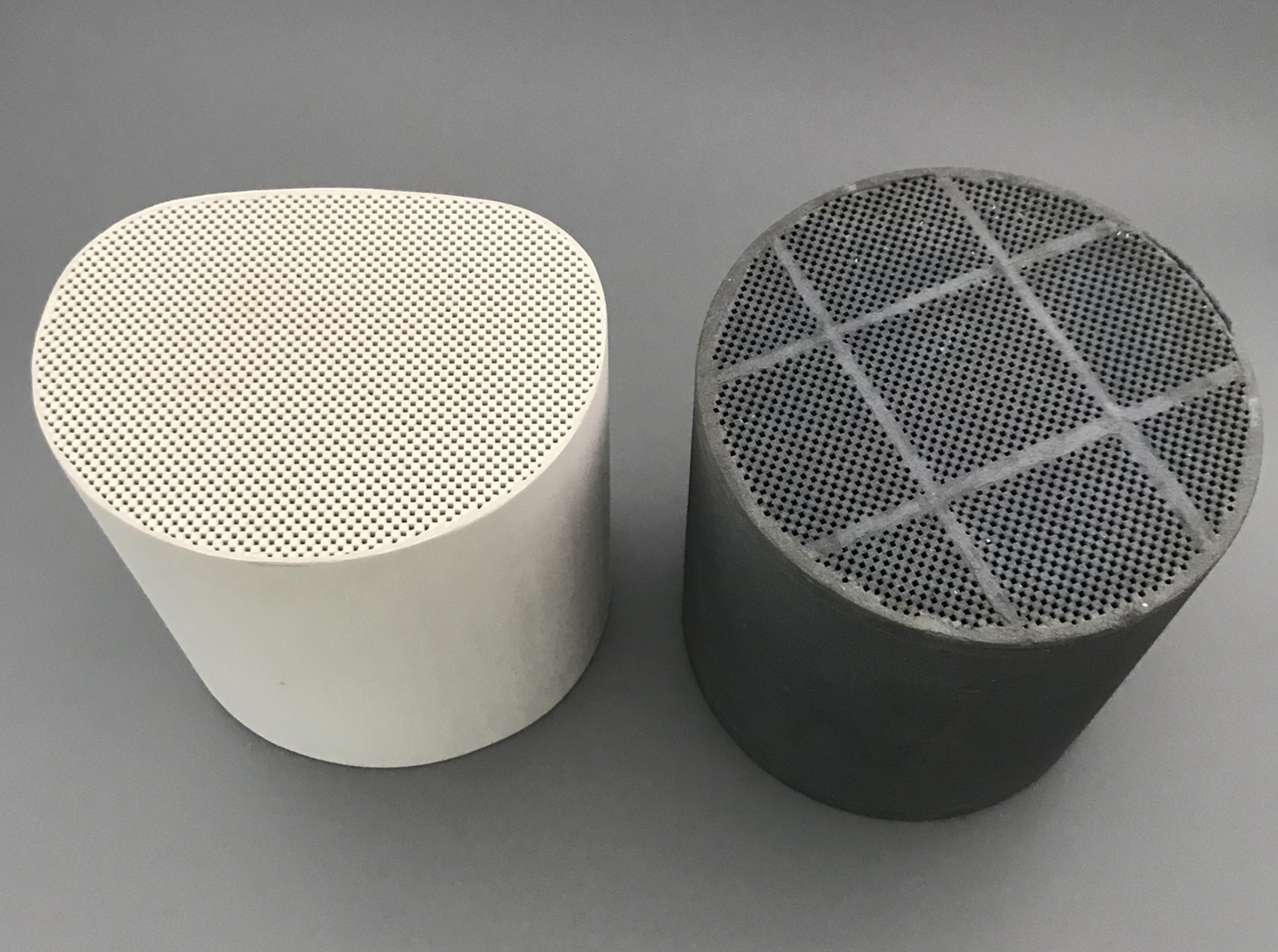
A CPSI label can conceal differences in wall material, dimensions, housing, and production evidence; those differences matter when comparing nominally equivalent DPF samples.
A buyer comparing catalyst manufacturing companies therefore needs more than a catalog image or a broad claim of customization. The central question is whether the offered sample, test report, and future delivered units describe the same DPF configuration.
In dpf automotive procurement, product fit and supplier capability are related but separate judgments. A filter must meet the engine’s capture, pressure, regeneration, and installation requirements. The company supplying it must be able to reproduce the approved construction, inspect the order, and document what was shipped. A useful evaluation keeps both records visible.
Compare the Offered Filter Specification
The filter drawing defines material, channel structure, diameter or width, length, mounting interfaces, and cell density. Cordierite and SiC have different thermal and mechanical behavior; round and square forms fit different packages. A 100–350 CPSI range offers options, but the proposed unit needs one specified density and geometry for comparison with engine measurements.
Capture and pressure should be reviewed together at stated flow and loading conditions. A clean specimen can look favorable until soot accumulates. Regeneration changes the load and temperature, so the test file needs a before-and-after record. Installation fit matters too: a nominally suitable ceramic core can fail to meet the duty if housing or seal design permits bypass.
A dpf automotive quotation should name the sample revision used for testing. If a different length, material, or cell density is offered for production, prior results may require a new technical review. A data sheet attached to a similar product is not the same as evidence for the proposed order. The buyer’s comparison becomes meaningful when alternatives use matched conditions.
Wall-flow geometry, selectable Cordierite or SiC, and round or square bodies describe the DPF construction available from Hualian Catalyst. Custom dimensions and 100–350 CPSI address the specified build, with Euro 4–6 diesel applications and passive or active regeneration stated for the range.
On an engine, the chosen combination must accommodate soot loading and the resulting thermal cycle, which determine the necessary capture and pressure measurements.
Verify the Company’s Production Evidence
Certification scope is a document question separate from the technical approval of a DPF. ISO 9001 and TS16949 certification are stated by Hualian, alongside OEM/ODM capability. Reported exports reach more than 50 countries, with catalyst-industry experience exceeding 30 years. Current documents establish the applicable organizational scope.
The company describes research, design, manufacturing, testing, delivery, and after-sales work as an integrated service. That range can matter if an OEM design changes during development or if field issues require tracing a batch. The practical question is how the organization links a drawing, production settings, inspection results, and shipped units. A missing lot identifier breaks this chain between departments.
Hualian says industrial-standard testing and order-specific reports accompany quality control before delivery. A buyer can request the report format and check whether it names material, dimensions, CPSI, test method, lot, and acceptance limits. A result for one sample needs a traceable connection to the later order. This is where a general quality-system statement becomes concrete.
Certificates and reports answer different questions. A quality-system certificate describes a management framework, whereas an order report describes results for a particular lot. The buyer needs identifiers and dates to establish whether both records apply to the units under review.
Exports and years in business show operating scope, yet they do not establish filter performance on a new engine. Similarly, ISO 9001 or TS16949 references need current certificates and applicable scope for a formal review. The technical decision still rests on measured capture, pressure, thermal behavior, and the ability to supply consistent units against the approved drawing.
Connect the Purchase to Verification
A comparison file can place the engine requirement beside each candidate’s measured result and delivered specification. It records material, geometry, pressure at stated flow and soot loading, regeneration behavior, and the test sample identity. Missing entries become explicit questions rather than disappearing under a single “DPF” label.
The purchasing agreement should also state what happens when the design changes. Revised geometry or materials may require fresh testing, a new drawing approval, and updated order documentation. A dpf automotive buyer can then distinguish an authorized variant from an undocumented substitution. Inspection reports need to identify the actual revision that was produced.
Service information completes the comparison. A supplier may provide installation guidance, maintenance criteria, or support for interpreting a filter issue, but these promises need defined records and contacts. After-sales capability has value when a returned part can be traced to the delivered lot and measured operating history. It does not rescue a filter whose original specification is wrong.
Before award, responsibility for unapproved changes needs clarification. A purchase from catalyst manufacturing companies covers both the tested DPF design and documentation accompanying production units.
Agreed contacts, revision approval, and inspection records give the buyer a route for resolving substituted material or mismatched lot. The order records that commitment; a promising sample leaves delivery responsibilities undefined.
