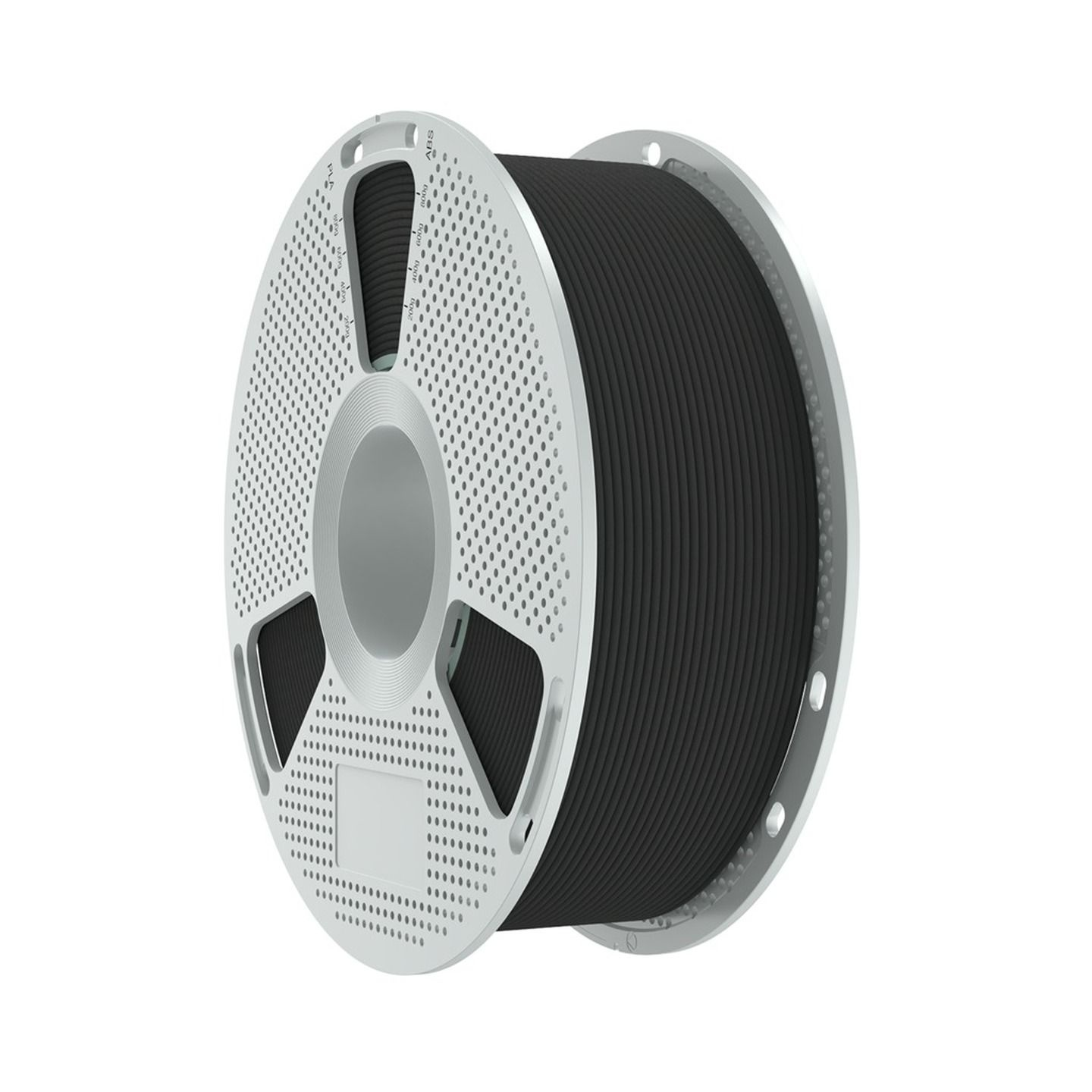
PLA is a popular material for 3D printing because it is relatively easy to print and suits many prototypes, display models, and everyday projects. However, functional components may face heat, repeated loads, impact, or dimensional requirements that call for different material properties.
Choosing an engineering filament becomes relevant when the working conditions exceed what a particular PLA formulation can accommodate. The decision should start with the part’s requirements, not simply a comparison of material labels.
Where Does PLA Work Well?
PLA is useful for visual prototypes, decorative objects, concept models, and components operating under moderate conditions. Its accessible printing requirements make it practical for testing a shape or checking assembly dimensions before committing to a more specialized material.
Its suitability depends on the specific formulation and application. Under sustained loads or elevated temperatures, some PLA parts may deform or lose their intended fit.
Thin sections and snap-fit features can also behave differently from solid test specimens. When a part needs to carry a load, withstand repeated movement, or operate near a heat source, its material properties deserve closer evaluation.
PLA can still suit functional parts with modest demands. Switching materials makes sense when testing or technical requirements indicate that greater heat resistance, stiffness, impact performance, or environmental durability is needed.
What Signs Indicate a Need for Engineering Filament?
Start by examining how the finished part will be used. A fixture holding a load over several hours has different requirements from a temporary assembly guide. A component installed near a warm motor needs suitable thermal properties, while a clip that opens repeatedly may need fatigue resistance and some flexibility.
Several measurements help compare candidate materials. Tensile strength describes resistance to pulling, flexural strength relates to bending, and impact strength measures response to sudden loading.
Elongation at break indicates how far a specimen stretches before fracturing. Heat deflection temperature (HDT) offers a reference for comparing thermal behavior under specified test conditions; it does not represent a universal continuous operating temperature.
Also consider moisture, chemicals, sunlight, and dimensional stability where relevant. Material data sheets provide a starting point, but printed-part performance depends on geometry, layer bonding, print settings, and load direction.
What Makes Carbon-Fiber-Reinforced Nylon Different?
Carbon-fiber-reinforced nylon combines a polymer matrix with fibers that can increase rigidity and improve dimensional stability. This material family can suit structural supports, brackets, tooling, and other components where stiffness and a favorable strength-to-weight profile are important.
However, reinforcement changes several properties at once, so the complete specification matters more than a single strength figure.
SUNLU PA6-CF is a nylon 6 formulation containing 20% carbon fiber. It features a tensile strength of 112 ± 10 MPa, a flexural strength of 192 ± 20 MPa, and a heat deflection temperature of 203 ± 3°C.
These values provide reference points for material comparison, although they do not directly predict how a component will perform in every printed orientation or operating condition.
Carbon fiber 3d printer filament also brings practical considerations. Abrasive fibers can wear a standard brass nozzle more quickly, and PA6-based filament requires attention to moisture control. Printer temperature capability, nozzle compatibility, and drying requirements should therefore be part of the buying decision.
Why Do Design and Printing Conditions Matter?
A suitable material can still produce a weak part when the design or printing process is poorly matched to its use. Fused filament fabrication builds components in layers, so bonding between layers influences performance under load. The direction of the applied force relative to the printed layers can affect where stress develops and how a part fails.
Wall thickness, infill pattern, corner geometry, and print orientation also matter. A bracket with inadequate material around a mounting hole may crack—even when printed in a strong polymer. For highly loaded parts, analyze stress concentrations and align critical features with expected force direction.
Material preparation is equally important. Nylon absorbs moisture, which can contribute to bubbling, inconsistent extrusion, and rough surfaces during printing. Follow the manufacturer’s drying and storage guidance, and confirm that the printer supports the material’s recommended temperature range.
How Should You Compare Material Costs?
Spool price does not reflect the entire cost of producing a usable part. A specialized engineering filament may require drying equipment, a wear-resistant nozzle, a compatible hotend, or an enclosure. Calibration time and failed prints also contribute to project costs.
For a simple prototype, PLA may remain a practical and economical choice. For a component exposed to heat or mechanical loads, a more specialized material may provide properties that justify its additional workflow requirements. Compare the expected service conditions, equipment needs, and replacement costs alongside the price per kilogram.
SUNLU’s PA6-CF has a nozzle temperature of 270–290°C, a bed temperature of 50–70°C, and a print speed of 50–100 mm/s. These settings are product-specific starting points; confirm compatibility with the printer and follow the latest manufacturer instructions.
How Can You Confirm the Right Material Choice?
Write down the part’s expected loads, working temperature, environmental exposure, dimensional tolerances, and service life. Compare these requirements against verified technical data, then check printer compatibility and material preparation needs. A small prototype can help assess fit, surface quality, and printing consistency before a larger production run.
For functional parts, test representative samples under conditions relevant to their intended use. Selecting an engineering filament involves balancing material properties, design, equipment, and cost.
When PLA is not suited to the project’s requirements, carbon-fiber-reinforced nylon such as SUNLU PA6-CF is one option to evaluate against those needs.
