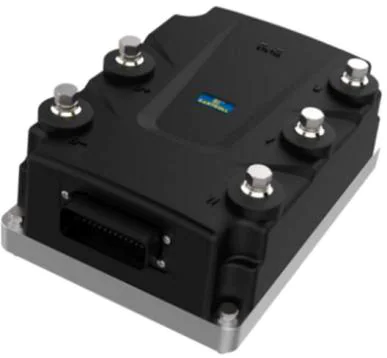
Power-dense brushless DC motor systems achieve their performance through advanced electronic control techniques, with switching frequency representing a critical design parameter. This high-frequency operation, where the motor controller rapidly switches power transistors on and off, directly influences system efficiency, thermal performance, and torque characteristics. These high-speed transitions enable the compact physical dimensions associated with power-dense electric motor solutions while maintaining robust output capabilities.
Current Waveform Precision and Torque Smoothness
Higher switching frequencies allow the motor controller to more accurately approximate ideal current waveforms. This refined control reduces torque ripple, the periodic variations in output torque that can cause vibration and audible noise. The electric motor solutions benefit from this smoother power delivery, particularly in applications requiring precise motion control or minimal mechanical vibration. Santroll implements switching optimization to enhance operational refinement in their motor controller products.
Thermal Management in Constrained Environments
The relationship between switching frequency and heat generation presents a key engineering consideration. While each switching event produces some heat loss, higher frequencies can actually reduce overall thermal load by minimizing current ripple. This allows the motor controller to maintain lower winding temperatures, enabling sustained high torque output from smaller packages. This thermal efficiency is fundamental to creating compact electric motor solutions without sacrificing performance.
Component Size and System Integration
Increased switching frequency directly enables the use of smaller passive components within the motor controller. Magnetically stored energy requirements decrease, allowing reduction in inductor and capacitor physical dimensions. This component miniaturization supports the development of highly integrated electric motor solutions where the motor controller occupies minimal space. Santroll utilizes these principles to develop systems that maximize power output within strict dimensional constraints.
The strategic implementation of high-frequency switching technology enables significant advances in power density for BLDC systems. This approach allows motor controller designs to achieve superior performance characteristics while reducing overall system size and weight. The continued refinement of switching technologies supports the development of more compact and efficient electric motor solutions for space-constrained applications. These engineering advances contribute to broader adoption of advanced motion systems across multiple industries.
