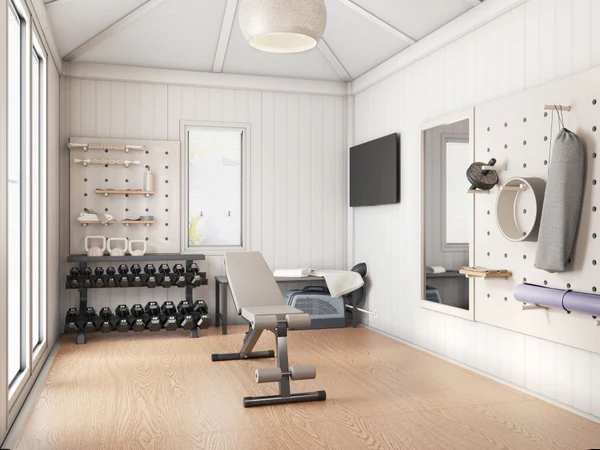
Creating a gym shed in your backyard can be a rewarding project that gives you a dedicated space for workouts, strength training, and stretching without needing to leave home. If you choose a backyard office shed like the SUNJOY Beyond Shed as the base for your gym, you already have a sturdy shell to begin with. However, good design goes beyond walls and a roof. Proper ventilation and suitable flooring are essential to make your gym shed comfortable, safe, and durable.
Consider Airflow When Planning Ventilation
Ventilation plays an important role in a gym environment because workout sessions can raise the temperature and humidity levels quickly. Without proper airflow, a gym shed can become stuffy, uncomfortable, and more prone to lingering odors.
To promote airflow inside your gym shed, start by identifying natural ventilation spots. Windows placed on opposite sides help promote cross breeze. When open, fresh air moves in one side and warm stale air moves out the other side. If your SUNJOY backyard office shed does not have sufficient windows, consider adding vents near the roofline. These allow hot air to escape naturally since warm air rises.
Electrical fans or ceiling fans are also worth considering. A small wall-mounted fan can circulate air during shorter workouts. For intense sessions, a larger fan or a quiet exhaust fan can help reduce heat buildup without creating too much noise. Since a backyard office shed like the one from SUNJOY often has electrical wiring options, installing powered ventilation is both practical and convenient.
Choose Flooring That Handles Sweat and Impact
Flooring is one of the most important aspects of designing a gym shed. The surface must be strong enough to support heavy equipment such as treadmills, weight benches, and free weights while providing some level of shock absorption to protect your joints.
Rubber flooring is a popular choice for gym spaces because it offers traction, shock absorption, and durability. Rubber mats come in various thicknesses, with thicker options providing better cushioning for weightlifting areas. The modular nature of rubber tiles makes installation straightforward, and any damaged piece can be replaced without affecting the whole floor.
Another option is high-density foam flooring. Foam panels are softer than rubber, which may benefit stretching and bodyweight workouts. Foam is less durable when exposed to heavy equipment, so choose foam only for areas where heavy weights are not frequently dropped. Regardless of the material, ensure the flooring surface is easy to clean. Sweat, dust, and outdoor dirt can accumulate quickly in a gym shed, so a surface that wipes clean and resists odors is preferable.
Plan for Drainage and Moisture Control
A gym shed must deal with moisture. Sweating during intense workouts releases moisture into the air and onto the floor. This moisture can lead to mildew or deterioration if not managed properly. First, ensure the base of your gym shed is slightly elevated or installed on a solid foundation that prevents water from seeping in from the ground. Proper grading around the shed can help water flow away from the structure.
If your gym shed sits on a concrete slab, you might still need moisture barriers underneath the flooring. These help prevent dampness from rising through the floor surface. Keeping airflow consistent also helps moisture evaporate rather than settling on surfaces.
Conclusion
Designing a gym shed with good ventilation and suitable flooring creates a comfortable workout space that feels more like a purpose-built gym than a storage area. With thoughtful airflow planning, ceiling or wall fans, and well-chosen flooring like rubber tiles or foam panels, your SUNJOY backyard office shed can become an inviting environment for daily exercise. Addressing moisture and airflow early in your design ensures your workouts are comfortable and your gym shed maintains its condition over time. Your fitness routine will benefit from a space that feels fresh, safe, and tailored to your needs.
