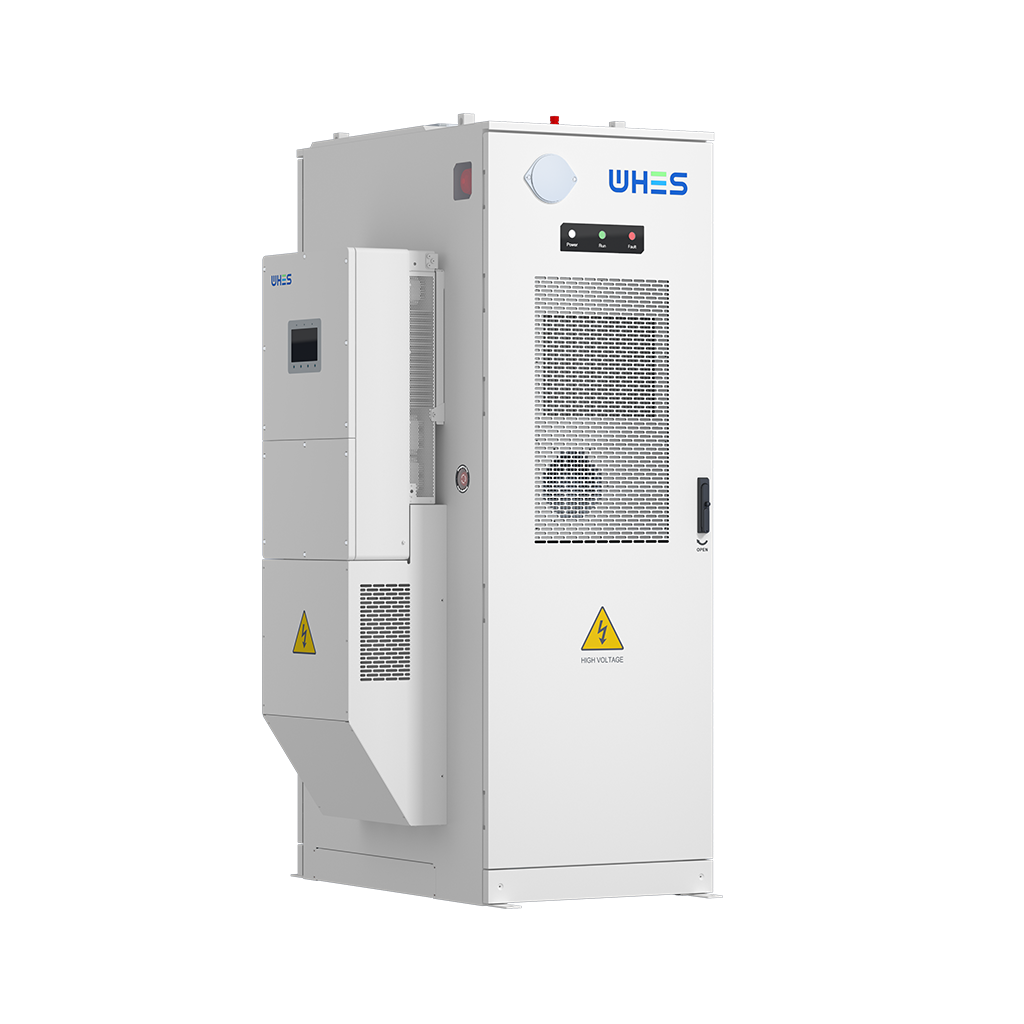
A hybrid energy storage system is an integrated power solution that combines photovoltaic (PV) generation, battery storage, and power conversion into a unified platform. In commercial and industrial energy projects, this architecture enhances energy flexibility, improves grid interaction, and supports optimized dispatch of solar battery storage assets. WHES delivers such capabilities through its PC Mini series, a fully integrated hybrid system designed for distributed energy applications and C&I project deployment.
Integrated Architecture for Solar and Storage Coordination
The core advantage of a hybrid energy storage system is its ability to coordinate solar generation and solar battery storage within a single control framework. The WHES PC Mini (29.9–50 kW / 57–100 kWh) integrates PV input, battery storage, and inverter functions into one all-in-one unit. This design enables up to 200% PV oversizing and supports multiple MPPT channels, improving energy harvesting efficiency under variable irradiation conditions. For EPC contractors and system integrators, this reduces installation complexity while improving system performance consistency across projects.
Application Scenarios in Commercial Energy Projects
A hybrid energy storage system is most valuable in scenarios requiring high energy flexibility, such as commercial buildings, industrial parks, agricultural operations, and microgrids. The WHES PC Mini supports fast EPS switching (typically <10 ms), ensuring uninterrupted power supply for critical loads during grid instability or outages. This makes solar battery storage particularly effective for maintaining operational continuity in facilities where downtime directly impacts productivity and revenue.
Scalable Deployment and Energy Optimization
Modern energy projects require scalable and manageable systems. The PC Mini supports parallel operation of up to six units, enabling capacity expansion without redesigning the entire infrastructure. This makes the hybrid energy storage system suitable for phased project deployment. WHES also integrates advanced energy management capabilities, enabling real-time monitoring, peak shaving, and optimized energy dispatch, improving overall system economics and grid compliance.
In summary, a hybrid energy storage system is best used in commercial and industrial environments where flexibility, scalability, and solar optimization are critical. With the PC Mini, WHES delivers advanced solar battery storage solutions tailored for modern energy infrastructure projects.
